13 Modern Rice Cooker Design Trends
The rice cooker has quietly transformed from a single-purpose appliance into one of the most thoughtfully designed products in the modern kitchen. While cooking performance remains their primary purpose, today’s rice cookers are also expected to complement interior design, simplify meal preparation, save counter space, and provide enough versatility to justify their permanent place on the countertop.
As kitchen design continues to shift toward clean aesthetics and multifunctional living, manufacturers are rethinking every aspect of the rice cooker, from its shape and materials to its interface and internal technology. The result is an appliance that not only prepares consistently excellent rice but also reflects broader trends in home design and consumer expectations.
Understanding these modern rice cooker design trends can help you choose an appliance that fits both your cooking habits and the overall look of your kitchen.
Rice Cookers Have Become Part of Kitchen Design
For years, many small kitchen appliances were designed with functionality as the only priority. Large plastic housings, oversized handles, exposed steam vents, and brightly colored buttons were common because appearance wasn’t considered particularly important. That mindset has changed significantly.
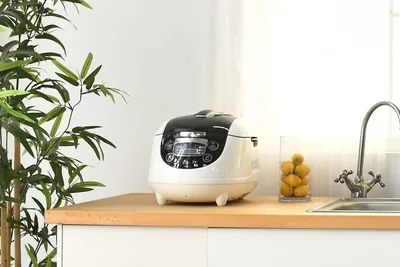
Many homeowners now leave their rice cookers on the counter every day rather than storing them in a cabinet after each use. As a result, manufacturers are designing appliances that look like intentional parts of the kitchen instead of temporary cooking tools.
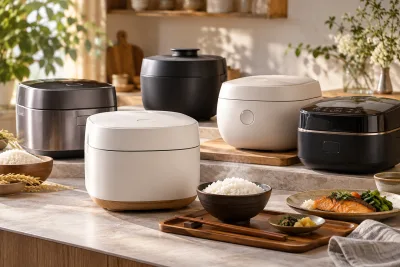
Modern rice cookers often feature softer edges, slimmer proportions, concealed hinges, and finishes that coordinate with contemporary cabinetry and countertops. Rather than drawing attention to themselves, they’re designed to blend naturally into kitchens that emphasize simplicity and clean lines.
This shift mirrors broader trends in home appliances, where products are increasingly expected to contribute to the overall aesthetic instead of disrupting it.
Minimalism Has Become the Dominant Design Language
Minimalism influences nearly every aspect of today’s rice cooker designs. Instead of covering the front panel with dozens of buttons, manufacturers now prioritize simplified interfaces that present only the controls users actually need.
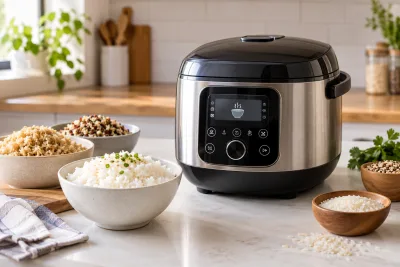
Touch-sensitive controls have become increasingly common, allowing the exterior surface to remain smooth and uncluttered. Even when physical buttons are used, they are often integrated into the overall design with subtle labeling and consistent spacing.
Color palettes have also become more restrained. Matte black, satin white, charcoal gray, brushed stainless steel, and muted metallic finishes dominate today’s market because they coordinate well with a wide variety of kitchen styles. These colors are less likely to feel dated as interior design preferences evolve, giving the appliance a longer visual lifespan.
Minimalism also serves a practical purpose. Smooth exterior surfaces are easier to clean, fewer seams collect less dirt, and simplified controls reduce the learning curve for new users.
Multifunctional Appliances Are Replacing Single-Purpose Products
One of the biggest changes in modern rice cooker design isn’t immediately visible. Instead, it reflects how manufacturers think about the appliance’s role in the kitchen.
Consumers increasingly want appliances that perform multiple jobs without requiring additional storage space. Rather than purchasing separate devices for steaming vegetables, slow cooking soups, preparing oatmeal, or cooking grains like quinoa and farro, many people prefer one appliance capable of handling all of these tasks.
Modern rice cookers are therefore designed around versatility. Multiple cooking programs are integrated into intuitive interfaces, allowing users to switch between different recipes without complicated manual adjustments. This multifunctional approach is particularly valuable in apartments and smaller homes where countertop space is limited, and every appliance needs to justify its footprint.
The emphasis on versatility has also influenced the appliance’s physical design. Accessories such as steaming baskets and removable inserts are carefully integrated so they store neatly without making the rice cooker feel unnecessarily bulky.
Smart Cooking Technology Is Improving the User Experience
Advances in cooking technology have transformed how modern rice cookers operate. Earlier generations relied on relatively simple thermostats that switched from cooking mode to warming mode once the water had evaporated. Today’s premium models take a far more sophisticated approach.
Microprocessors continuously monitor cooking conditions, making small adjustments throughout the cooking cycle rather than relying on a single fixed temperature. This technology allows the appliance to account for different rice varieties, cooking quantities, and moisture levels, producing more consistent results with less effort from the user.
Some manufacturers have also introduced wireless connectivity, allowing users to monitor cooking progress through smartphone applications or receive notifications when food is ready. Although these smart features remain more common in premium models, they reflect the broader movement toward connected kitchens where appliances communicate with users rather than operating independently.
Even consumers who never use mobile connectivity still benefit from smarter cooking systems because automatic adjustments improve consistency while reducing the chances of undercooked or overcooked rice.
User Interfaces Continue to Become Simpler
As rice cookers gain more cooking functions, manufacturers face the challenge of preventing the appliance from becoming more complicated to operate.
Rather than adding additional buttons, modern designs focus on improving how users interact with the appliance. Large digital displays clearly present cooking modes, remaining cooking time, and selected settings without overwhelming the user with unnecessary information.
Navigation has become more intuitive as well. Instead of requiring users to memorize combinations of buttons, many models organize cooking programs into straightforward menus that are easy to understand even for first-time owners.
This emphasis on user experience reflects the growing expectation that kitchen appliances should be as approachable as smartphones or tablets. Good design now means reducing complexity instead of adding more visible controls.
Materials Are Chosen for Performance as Well as Appearance
Modern rice cooker design extends well beyond the exterior shell. Manufacturers increasingly select materials that improve durability, cooking performance, and long-term ownership satisfaction.
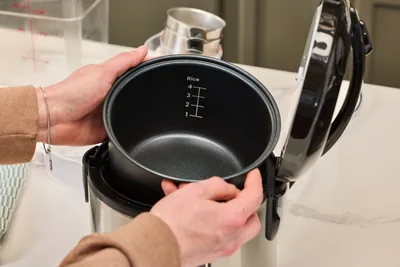
Many higher-quality models use thicker inner cooking pots that distribute heat more evenly, helping prevent localized hot spots while producing more consistent cooking results. Ceramic-coated bowls have become increasingly popular among consumers looking for alternatives to traditional nonstick coatings, while premium stainless steel exteriors offer greater resistance to dents and scratches.
Attention has also shifted toward smaller details that influence everyday use. Heat-resistant handles remain comfortable throughout cooking, lids feel more substantial when opening and closing, and textured finishes resist fingerprints that would otherwise detract from the appliance’s appearance. These material choices contribute to an appliance that not only looks more premium but also maintains its appearance after years of regular use.
Compact Designs Reflect Changing Kitchen Layouts
Not every household has the luxury of expansive countertops. Smaller homes, apartments, and open-concept kitchens have encouraged manufacturers to rethink the physical dimensions of modern rice cookers.
Rather than simply making appliances smaller, designers focus on using available space more efficiently. Taller vertical designs reduce the amount of countertop required while still providing generous cooking capacity. Integrated cord storage eliminates unnecessary clutter, while flush-fitting lids create a cleaner overall silhouette.
Manufacturers also pay closer attention to how steam exits the appliance. Improved steam management systems reduce the amount of moisture released toward upper cabinets, making the appliance easier to position beneath overhead storage without causing long-term damage from repeated exposure to steam. The result is a rice cooker that occupies less visual and physical space without sacrificing performance.
Premium Cooking Technologies Are Influencing Appliance Design
Some of the most significant design changes occur inside the appliance.
Induction heating systems, for example, eliminate many of the limitations associated with traditional bottom-mounted heating plates. Instead of heating only one portion of the cooking bowl, induction technology generates heat more evenly around the entire vessel, allowing for greater temperature precision throughout the cooking cycle.
Pressure cooking technology has also become increasingly common in premium rice cookers. By combining carefully controlled pressure with advanced temperature management, these appliances can improve the texture of brown rice, mixed grains, and porridge while reducing cooking times.
Incorporating these technologies requires substantial internal engineering, yet manufacturers continue to package them inside increasingly refined and compact designs. This balance between sophisticated engineering and understated aesthetics represents one of the defining characteristics of modern appliance design.
Convenience Extends Beyond Cooking Performance
Consumers evaluate kitchen appliances based on the entire ownership experience rather than cooking results alone. Cleaning, maintenance, storage, and everyday usability have therefore become central considerations during product development.
Many modern rice cookers include removable inner lids that can be washed separately, detachable steam caps that simplify maintenance, and condensation collectors that prevent excess moisture from accumulating around the appliance. Exterior surfaces are designed with fewer grooves and seams, making routine cleaning significantly easier.
These improvements may appear minor individually, but together they reduce the amount of effort required after each meal. Over time, this convenience becomes one of the features owners appreciate most because it encourages more frequent use of the appliance.
Sustainability Is Beginning to Shape Modern Rice Cooker Design
Environmental considerations are becoming increasingly influential throughout the appliance industry, and rice cookers are no exception. Manufacturers are placing greater emphasis on durability so products remain functional for many years instead of requiring frequent replacement. Better insulation helps reduce energy consumption during extended keep-warm cycles, while higher-quality internal components improve reliability over thousands of cooking sessions.
Packaging has also become more environmentally conscious, with many brands reducing unnecessary plastic materials in favor of recyclable alternatives. Although sustainability initiatives vary between manufacturers, the broader trend reflects growing consumer interest in appliances that offer long-term value rather than short-term convenience alone. This focus on longevity often aligns with better overall product quality, making sustainable design beneficial for both consumers and manufacturers.
Selecting a Rice Cooker That Matches Modern Living
Modern rice cooker design is no longer defined by appearance alone. The best models successfully combine aesthetics, cooking performance, intuitive technology, and practical everyday usability into a single appliance that fits naturally into contemporary homes.
When comparing rice cookers, it is worth considering how each design decision affects daily life. A simplified interface may save time every morning. A compact footprint may free valuable countertop space. A higher-quality cooking bowl may improve both rice texture and durability over many years of use. Likewise, advanced cooking technology may produce more consistent results while requiring less attention throughout the cooking process.
As manufacturers continue to refine their designs, rice cookers are becoming more integrated into the modern kitchen experience rather than remaining isolated cooking tools. Their evolution reflects changing expectations about how appliances should look, function, and interact with the spaces where people prepare meals every day.