How to Use Your Rice Cooker to Reduce Energy Bills
If you’re trying to cut your electricity bill, your kitchen is one of the first places worth looking at. Cooking appliances quietly consume a large portion of household energy, especially if you’re using ovens or stovetops daily. A rice cooker might not seem like a major factor, but it’s one of the most efficient tools you can use when handled correctly.
The key difference isn’t just the appliance itself. It’s how you use it. A rice cooker can either be a low-cost, energy-efficient solution or an overlooked source of unnecessary power usage. Understanding how it consumes electricity and how to optimize it makes the difference between small savings and meaningful reductions over time.
Why Rice Cookers Are More Energy Efficient Than You Think
Most rice cookers operate between 300 and 700 watts, depending on size and model. That’s significantly lower than an electric stove burner, which can range from 1,200 to 3,000 watts, or an oven that can easily exceed 4,000 watts during preheating.
What matters isn’t just wattage. It’s how long the appliance runs at that wattage. A rice cooker typically uses full power only during the initial heating phase. Once the water is absorbed, it automatically switches to a low-power “keep warm” mode. This automatic adjustment prevents unnecessary energy draw, which is something stovetops and ovens simply don’t do.
In practical terms, cooking rice in a rice cooker often uses between 0.2 and 0.5 kWh per cycle. That translates to just a few cents per use in most parts of the US, depending on local electricity rates.
Rice Cooker vs Stove Energy Cost: What Actually Uses Less Power
A stovetop may bring water to a boil faster, but it requires sustained high power to keep it there. A rice cooker takes a bit longer to reach the boiling point, but compensates by reducing energy use during the rest of the cycle.
If you compare a 1,500-watt burner running for 20 minutes to a 500-watt rice cooker running for 30 minutes, the total energy usage is often lower for the rice cooker. The difference becomes more noticeable when you cook multiple times per week.
Let’s break it down using a rough estimate. If electricity costs $0.15 per kWh:
- Rice cooker cycle: ~0.3 kWh = $0.045 per use
- Stove cooking: ~0.6 kWh = $0.09 per use
That may seem small, but over time it adds up. Cooking rice five times a week could save around $10 to $15 per year. When you expand that to full meals and multiple uses, the savings become more meaningful.
How to Use a Rice Cooker to Reduce Energy Bills
Cooking Multiple Meals in One Cycle
One of the biggest advantages of a rice cooker is that it can handle more than just rice. You can cook vegetables, proteins, and grains at the same time using layering techniques. Instead of running multiple appliances, you consolidate everything into a single cooking cycle. This reduces total energy usage and shortens cooking time across the board.
Using Residual Heat Effectively
Once the cooking cycle finishes, the internal heat doesn’t disappear immediately. Many people overlook this and reheat food later using a microwave or stove. You can take advantage of that retained heat by letting food rest in the cooker for a few minutes after it switches modes. This finishes cooking without additional electricity.
Avoiding Energy Waste During Cooking
Small habits make a noticeable difference. Opening the lid frequently releases heat and forces the appliance to use more energy to maintain the temperature. Using the correct water ratio ensures the cooker doesn’t run longer than necessary. These adjustments don’t require extra effort, but they directly impact how efficiently the appliance operates.
Batch Cooking and Weekly Meal Prep
Cooking larger portions reduces the number of times you need to run the appliance. This spreads the energy cost across multiple meals, lowering the cost per serving. Meal prep also reduces reliance on energy-intensive appliances during the week. Instead of cooking from scratch every day, you’re reheating pre-cooked meals.
Cooking During Off-Peak Electricity Hours
Electricity rates in some areas vary depending on the time of day. Cooking during off-peak hours can reduce costs even further. Since rice cookers are easy to set and leave, they’re well-suited for this approach.
Replacing Multiple Appliances With One
A rice cooker can function as a steamer, slow cooker, and even a basic one-pot meal solution. Replacing multiple cooking sessions with a single appliance reduces overall energy consumption.
How Rice Cooker Usage Habits Affect Electricity Costs
Most rice cookers don’t run at full power for the entire cooking time. They cycle between heating and maintaining temperature. On average, a standard unit uses less than 0.5 kWh per session. Compared to ovens or stovetops, that’s a fraction of the energy. Even a microwave, which is often considered efficient, can use similar or higher wattage during operation.
The way you use your rice cooker matters more than the appliance itself. Running it multiple times a day for small portions is less efficient than cooking larger batches at once. Leaving it on “keep warm” for extended periods can also increase consumption unnecessarily. Optimizing usage patterns turns a low-energy appliance into a genuinely cost-saving tool.
Does Keep Warm Mode Use Electricity? What You Need to Know
Keep warm mode typically uses between 30 and 100 watts. That’s relatively low, but it adds up over several hours. Leaving the cooker on for four to six hours can use as much energy as the cooking cycle itself. This is where many people lose the efficiency advantage without realizing it.
Short-term use is fine if you plan to eat within an hour. Beyond that, it’s more efficient to turn off the cooker and store the food properly. Reheating later, especially in a microwave, often uses less energy than maintaining warmth for long periods.
Common Mistakes That Increase Your Energy Bill
Overfilling or Underfilling
Running a rice cooker for very small portions isn’t as efficient as it seems. The appliance still goes through the same heating cycle, so you end up using nearly the same amount of electricity for less output. Over time, that increases your cost per meal.
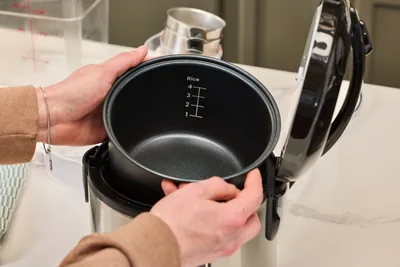
On the other hand, overfilling the cooker can slow down the cooking process because it takes longer for the heat to distribute evenly. This forces the unit to stay in its high-power phase longer than necessary.
The most efficient approach is to cook close to the recommended capacity, which allows the cooker to operate within its intended energy range and keeps cooking time predictable.
Opening the Lid Too Often
It’s tempting to check on your food, especially if you’re cooking more than just rice. But every time you lift the lid, you release built-up steam and heat that the cooker relies on to maintain internal pressure and temperature. Once that heat escapes, the thermostat triggers the heating element again, pulling more electricity to recover the lost temperature.
This repeated cycle adds up quickly, especially during longer cooking sessions. Letting the cooker complete its cycle without interruption keeps energy usage stable and ensures the appliance doesn’t have to work harder than necessary.
Using the Wrong Rice-to-Water Ratio
The rice-to-water ratio directly affects how long your cooker stays in active heating mode. Too much water means the appliance needs extra time and energy to evaporate the excess before it can switch to “keep warm.” Too little water can interrupt the cooking process, sometimes causing the cooker to restart or struggle to reach the correct temperature.
Both scenarios lead to inefficient energy use. Sticking to accurate measurements allows the cooker’s internal sensors to work properly, ensuring it completes the cycle at the right time without wasting electricity.
Frequently Asked Questions
How much electricity does a rice cooker use per month?
It depends on usage frequency, but for an average household using it five times per week, consumption typically ranges between 6 to 10 kWh per month. That’s relatively low compared to most kitchen appliances.
Is a rice cooker cheaper than a microwave?
They are similar in efficiency, but rice cookers are better for longer cooking processes because they regulate heat automatically. Microwaves are more efficient for reheating.
Can a rice cooker really reduce energy bills?
Yes, but the impact depends on how you use it. Replacing high-energy appliances and optimizing usage habits leads to measurable savings over time.
Does cooking rice in bulk save electricity?
Yes. Cooking larger portions reduces the number of cooking cycles, which lowers total energy consumption per meal.
Is it safe to leave a rice cooker on all day?
It’s designed to be safe, but not energy-efficient. Long periods on keep warm mode increase electricity usage without adding value.