Guide to Choosing Artistic Rice Cookers with Unique Patterns and Finishes
Rice cookers are usually designed to disappear into the kitchen. Stainless steel, white plastic, black plastic, and neutral finishes dominate the appliance aisle because they’re easy to coordinate with almost any space. But not every kitchen needs another appliance designed to blend in.
Artistic rice cookers with unique patterns and finishes treat the exterior of the appliance as part of the design rather than an afterthought. Floral motifs, patterned shells, unusual textures, metallic accents, glossy colors, and retro-inspired finishes can transform a rice cooker from a purely functional appliance into something you actually want to leave on the counter.
That can be particularly appealing in smaller kitchens where appliances remain visible throughout the day. When countertop space is limited, the objects occupying it inevitably become part of the room’s visual character. The challenge is finding a rice cooker that looks distinctive without sacrificing the features that make the appliance useful in the first place.
What Makes a Rice Cooker Artistic?
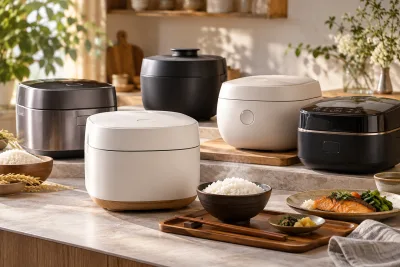
An artistic rice cooker doesn’t necessarily need an elaborate illustration or brightly colored pattern. What separates these models from conventional appliances is intentional visual design. Some manufacturers use printed graphics or decorative motifs across the exterior housing. Others create visual interest through color, texture, shape, or material combinations.
A matte pastel cooker with rounded controls can have a completely different personality from a polished stainless steel model, even when both perform essentially the same cooking tasks. Likewise, a cooker with wood-look details, metallic trim, or an embossed exterior can become a decorative element without relying on printed artwork.
Shape matters too. Traditional rice cookers often have a utilitarian cylindrical or boxy form. More design-conscious models may use softly rounded bodies, compact proportions, hidden controls, or carefully integrated handles and displays. The result is an appliance that feels considered from every angle, which matters when it spends most of its life sitting in plain sight.
Different Artistic Rice Cooker Designs You Can Opt For
Patterned Rice Cookers
Patterns offer one of the most obvious ways to turn a rice cooker into a statement piece.
Floral designs can work especially well in cottage-inspired, vintage, eclectic, or colorful kitchens. Depending on the artwork, the effect can range from delicate botanical decoration to bold retro prints. Geometric patterns create a different look. Repeating lines, abstract shapes, dots, grids, and other graphic elements can complement contemporary kitchens without making the appliance feel overly decorative.
Pattern scale affects the overall impression as well. A small repeating motif tends to appear more subtle from across the room, while large illustrations or contrasting graphics naturally draw attention.
If your countertop already contains patterned tile, decorative canisters, colorful cookware, or other visually strong elements, a heavily patterned rice cooker may create competition rather than cohesion. In that situation, choosing a design that repeats one or two existing colors can make the appliance feel more intentional.
In a mostly neutral kitchen, you have considerably more freedom. A patterned cooker can function almost like a piece of functional artwork because there are fewer surrounding elements competing for attention.
Glossy Finishes
Gloss is common on appliances, but it becomes much more expressive when paired with an unusual color. A glossy red, deep green, cream, pink, or blue rice cooker can resemble enameled cookware more than conventional countertop electronics. The reflective surface gives colors additional depth and can make a relatively inexpensive appliance appear more decorative.
Glossy finishes also interact strongly with kitchen lighting. Under-counter lights, pendant fixtures, and nearby windows can create highlights across curved appliance surfaces, emphasizing their shape.
There’s a practical trade-off. High-gloss surfaces can make fingerprints, water spots, dust, and cooking residue more noticeable, particularly on dark colors. A cooker positioned near the stove may therefore need more frequent wiping if maintaining the polished appearance matters to you.
The exterior should only be cleaned according to the manufacturer’s instructions. Rice cookers contain electrical components, vents, controls, and heating systems, so decorative appearance shouldn’t encourage aggressive cleaning methods that could damage the appliance.
Matte Rice Cookers
Matte finishes have become increasingly common across countertop appliances because they create visual impact without the reflectivity of polished surfaces. On a rice cooker, matte color can make a relatively simple shape feel more sophisticated. Muted sage, dusty blue, cream, charcoal, beige, and pastel finishes are particularly compatible with kitchens built around softer color palettes.
Matte surfaces can also make bold colors easier to incorporate. A highly saturated glossy appliance may dominate a countertop, while a similar color in a low-sheen finish often appears more restrained. The tactile quality matters too. Some matte finishes have a smooth, almost powder-coated appearance, while others use slightly textured plastic or coated metal.
Don’t assume matte automatically means easier maintenance. Certain surfaces can show oil marks or absorb the appearance of greasy fingerprints differently from gloss. If you’re comparing finishes in person, touching a display model can tell you more than a product photograph about how the surface behaves.
Metallic Accents
Metal doesn’t have to mean the familiar brushed stainless steel appliance. Gold-tone, copper-colored, champagne, bronze, and polished metallic details can add contrast around handles, lids, control panels, buttons, or display areas. Even a relatively small amount of metallic trim can change the character of an otherwise simple cooker.
The key is restraint. Large areas of highly reflective metallic material can become visually overwhelming, particularly when surrounded by chrome faucets, stainless steel refrigerators, metallic hardware, and other reflective surfaces. Smaller accents are easier to coordinate.
Look at the hardware already present in your kitchen. A cooker doesn’t have to match your cabinet handles or faucet perfectly, but repeating similar warm or cool undertones can help different elements feel connected. You should also distinguish between actual metal components and metallic-looking coatings. They’re not necessarily equivalent in durability, heat behavior, or cleaning requirements.
Textured Finishes
Texture is one of the most understated approaches to artistic appliance design. Instead of printing artwork onto the cooker, manufacturers can create visual interest through ribbing, embossing, molded patterns, brushed surfaces, or contrasting tactile materials.
Texture works particularly well if you prefer monochromatic interiors. A cream-colored rice cooker with subtle vertical ribbing, for example, can have significantly more visual character than a completely smooth cream appliance without introducing another color.
There’s a functional consideration, however. Deep grooves and complicated exterior textures can collect dust, crumbs, and cooking residue. A highly detailed surface positioned near food preparation areas may require more effort to clean than a smooth housing. When evaluating textured rice cookers, consider whether the decorative details can be wiped easily rather than judging the design solely from photographs.
Retro-Inspired Rice Cookers
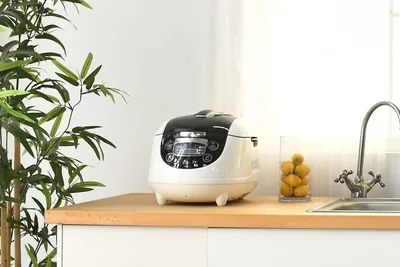
Retro appliance design shows that a rice cooker doesn’t need printed patterns to make a statement. Rounded bodies, analog-looking controls, cream-colored housings, pastel finishes, chrome-inspired accents, and deliberately simple interfaces can evoke mid-century or vintage kitchen appliances.
This style works especially well when other countertop appliances share similar visual cues. A retro-style toaster, electric kettle, and rice cooker don’t necessarily need to come from the same manufacturer. Similar shapes and colors can create enough continuity.
Be careful not to prioritize nostalgia over usability. A vintage-looking appliance can still contain modern electronic controls, timers, cooking programs, and safety features. Conversely, an attractive exterior doesn’t guarantee that a cooker offers the functions you need. The best retro-inspired rice cooker combines the visual language of an earlier era with contemporary cooking performance and practical controls.
Minimalist Rice Cookers
Artistic doesn’t have to mean ornate. Some of the most visually interesting rice cookers use almost no decoration. Their appeal comes from proportions, materials, carefully selected colors, and simplified interfaces.
A seamless lid, concealed display, monochromatic body, or minimal control panel can create an architectural appearance. These designs tend to work well in modern kitchens where visual clutter is intentionally minimized.
If this aesthetic appeals to you, exploring minimalist rice cooker designs for simple kitchens can help you think about how appliance proportions, controls, and countertop placement influence the overall space.
Minimalist models also demonstrate an important principle: uniqueness can come from what a designer removes. An appliance doesn’t need decorative graphics if its silhouette, surface, and interface already create a recognizable identity.
How to Match an Artistic Rice Cooker to Your Kitchen
Start with the elements that aren’t likely to change soon. Cabinet color, countertops, backsplash tile, flooring, and major appliances create the visual foundation of a kitchen. Smaller countertop appliances can either reinforce that foundation or intentionally contrast with it.
For a neutral kitchen, an artistic rice cooker can provide an accent color. A warm red, green, blue, or patterned design becomes more noticeable against white, beige, gray, or natural wood surroundings.
In a colorful kitchen, repeating an existing shade is often more effective than introducing another unrelated color. If your backsplash already contains blue details, for example, a blue cooker can reinforce the palette.
You can also coordinate through materials rather than exact colors. Wood-look accents can relate to cutting boards and cabinetry, while metallic details can echo cabinet hardware.
Think about neighboring appliances as a group. A rice cooker rarely sits completely alone. Kettles, coffee makers, air fryers, stand mixers, and toasters may all share the same counter. They don’t need to match perfectly, but they should look as though they belong in the same room.
Tips When Choosing an Artistic Rice Cooker for Your Kitchen
Think About Where the Rice Cooker Will Actually Live
A striking design makes little difference if you store the appliance in a cabinet after every use. Before choosing an artistic rice cooker, determine where it will normally sit and how visible it will be from the rest of the room.
Counter depth matters. A large cooker can look significantly more imposing in a compact kitchen than it does in isolated product photography. Check the dimensions and leave enough surrounding space to use the lid, controls, cord, and steam vent safely.
Upper cabinets can also affect placement. Rice cookers release steam, so you shouldn’t choose a location based entirely on where the appliance looks best. Follow the manufacturer’s clearance and operating instructions, and make sure steam isn’t repeatedly directed toward surfaces that could be affected by heat or moisture.
If countertop space is limited, physical proportions may matter more than decorative details. A compact cooker with a distinctive finish can make a stronger design choice than a larger, more elaborate appliance that overwhelms the available space.
Don’t Let the Exterior Distract From the Cooking System
The artwork may attract you to a particular rice cooker, but the cooking system determines whether you’ll continue using it.
Capacity should be one of your first practical considerations. Rice cooker capacities aren’t always described consistently, and the measuring cup supplied with a cooker may differ from a standard US measuring cup. Check the manufacturer’s stated cooked and uncooked capacities rather than relying solely on a number printed prominently in the product name.
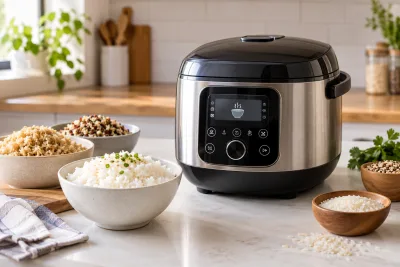
Cooking technology matters as well. Basic conventional rice cookers generally use a heating plate and thermostat to cook until the appliance detects that available water has been absorbed or evaporated. More sophisticated models may use microcomputer-controlled cooking programs, often described as fuzzy logic, to make adjustments during the cooking cycle.
Some premium cookers use induction heating, which heats the cooking vessel differently from a conventional bottom heating element.
These technologies can influence cooking consistency, program flexibility, price, and appliance size. A decorative exterior shouldn’t prevent you from comparing what is actually happening inside the machine.
Examine the Inner Pot as Carefully as the Outer Finish
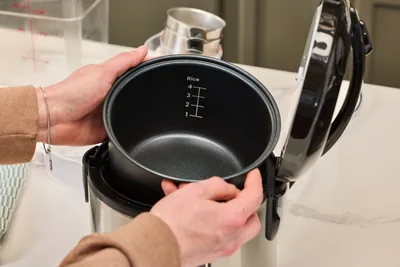
The exterior gets most of the attention when you’re shopping for an artistic rice cooker, but the inner pot deserves equal scrutiny. Consider its construction, weight, handles, measurement markings, and care requirements. Many rice cookers use coated inner pots to reduce sticking, while others use different materials and surface treatments.
Whatever the material, follow the manufacturer’s cleaning instructions. Abrasive scrubbers or inappropriate utensils can damage certain cooking surfaces. A removable inner lid can also simplify cleaning, particularly if you frequently cook rice varieties that produce considerable starch or use the cooker for oatmeal, mixed grains, or other foods.
Steam vents and condensation collectors deserve attention for the same reason. Decorative design is much less enjoyable if routine cleanup becomes frustrating.
Controls Should Remain Easy to Read and Use
Creative appliance design occasionally creates a conflict between appearance and usability. A perfectly seamless control panel may look elegant but become annoying if the buttons are difficult to distinguish. Low-contrast labels can disappear under certain lighting conditions, while glossy panels may reflect overhead lights.
Consider how you’ll interact with the cooker rather than how it appears when switched off. If you frequently use delayed cooking, multiple rice settings, porridge modes, or keep-warm functions, those controls should be easy to find. A beautiful interface that requires repeatedly consulting the manual isn’t necessarily good design.
Physical buttons can offer clear tactile feedback, while touch controls create a smoother exterior. Neither approach is universally better. The right choice depends on how you use the appliance and what kind of interface you find intuitive.
Decorative Finishes Need to Survive Real Kitchen Use
A rice cooker isn’t a decorative vase. It operates around steam, moisture, food residue, fingerprints, heat, and frequent handling. That makes durability particularly relevant when the exterior includes printed graphics, special coatings, metallic details, or unusual surface treatments.
Pay attention to manufacturer cleaning instructions and warranty information. Decorative elements located around frequently touched areas, such as lid releases and control buttons, experience more wear than designs placed on relatively untouched side panels.
Product photography can also make surface treatments difficult to judge. Colors may appear different under studio lighting, and subtle textures may barely be visible. Customer photos can sometimes provide useful visual context, but the manufacturer’s specifications remain the better source for dimensions, materials, electrical requirements, and approved care procedures.
Choosing Artistic Rice Cookers That Still Make Sense Years Later
Highly distinctive appliances can date quickly if they’re chosen solely because a particular pattern or color is fashionable. One way to reduce that risk is to choose a design connected to colors or motifs you already use rather than a trend you’ve only recently encountered.
Another approach is to let the finish provide personality while keeping the overall form relatively simple. A cooker in an unusual color with clean lines can be easier to integrate into future décor changes than one combining multiple strong patterns, textures, and decorative details.
That doesn’t mean you should always choose the safest option. If a floral, illustrated, retro, or brightly colored rice cooker genuinely suits your style, longevity may come precisely from choosing something you enjoy rather than something designed to offend nobody.
The goal isn’t to predict future appliance trends. It’s to find a design you’ll still be happy seeing on your counter after the novelty wears off.
When an Artistic Rice Cooker Is Worth Paying More For
Paying extra for design makes the most sense when the rice cooker will remain visible and receive frequent use. If you cook rice several times a week and the appliance permanently occupies countertop space, appearance can reasonably become part of the buying decision. You’re effectively purchasing both a cooking appliance and a visible object within your kitchen.
The calculation changes if you only use a rice cooker occasionally and store it in a pantry between meals. In that case, spending substantially more for a special exterior may provide little practical benefit.
Compare the premium against functional improvements too. If two similarly capable cookers differ primarily because one has a decorative finish, you’re paying specifically for aesthetics. That’s perfectly reasonable if the design matters to you, but it helps to recognize what the additional money is buying.
If the more expensive model also provides better temperature control, additional cooking programs, a more useful capacity, easier cleaning, or construction you prefer, the value proposition becomes broader than appearance alone.
Artistic Rice Cookers Can Make an Everyday Appliance Feel Personal
Artistic rice cookers with unique patterns and finishes prove that practical kitchen equipment doesn’t have to be visually anonymous.
Patterns can introduce personality, matte and glossy finishes can shape how color behaves in the room, metallic accents can add refinement, and textured surfaces can create interest without relying on bold decoration. Retro silhouettes and minimalist forms offer additional ways to make the appliance distinctive.
Appearance, however, works best when it’s supported by thoughtful function. Capacity, cooking technology, inner-pot construction, cleaning requirements, controls, countertop dimensions, and steam clearance still determine how well a rice cooker fits into everyday life.
Choose those fundamentals first, then consider how the exterior interacts with your kitchen. When the cooking performance and visual design work together, a rice cooker stops feeling like something you need to hide after dinner. It becomes a useful part of the room’s design.